Showing posts with label Islam. Show all posts

Monday, July 8, 2013

Ramadan begins

I meant to post this at the beginning of Ramadan (also pronounced Ramazan) as I did on Facebook, but got bogged down in a major work project. I'm posting this later in July but back-dating to early July so that it appears when I intended to post it...

To those about to enter the holy month of Ramadan, Ramazan Mubarak!

To those who are not, have a look at the message below the image from Khalvat Dar Anjuman (Ibrahim Baba) about Ramazan with a few thoughts on how to honor and support the observance of Muslim friends, acquaintances, neighbors, and co-workers.

Because the calendar of Islam is a lunar one, Ramazan rotates around the seasons (and thus around the months of the Gregorian calendar). This year in the northern hemisphere, with Ramazan in the summer, the fast from sunrise to sunset, every day for a month, is particularly long and demanding.

We who are not Muslim can learn much from those who are spending this month in the ancient traditions of fasting and prayer, of almsgiving and awareness of common humanity and of the needs of the poor, of gathering for breaking the fast with family and friends, of deepening and re-focusing attention on the All-Merciful, the Creator. Can we, during this month, learn about and from our neighbors? How can we do so without burdening our neighbors, but by taking on some discipline or task ourselves? How can we attune our listening and attention? How will we be challenged to deepen our own walk, our practice, our faith, our ethics? How can we be mindful and compassionate neighbors? How can we learn to be friends on this polyphonic planet Earth?


And here is Ibrahim Baba's message, which I first read on Facebook and which he has given me permission to re-post here. (I have left the lower-case and upper-case spellings as written intentionally by the author.)


on Tuesday, 9 july 2013, many of us will enter into the Sacred Month of Ramazan, the Queen of Months. some of us will be fasting from sunrise to sunset, going about the activities of our day. others will be feeding others as their practice during this sacred time while others will build community in other ways. this is the most precious time of the year for some of us. for some of us it is a time of exceeding joy; for others it is a time of struggle. as any kind of religious time, it brings issues for some, troubling memories or fears of isolation and exclusion. it is also a time of intensifying our efforts for justice, equity, equality, access, accessibility, radical inclusion, etc. through more prayer, more dhikr, more work in our communities, etc.. because we actually have more time as we are not eating throughout the day, lol!

if you are not a muslim and know muslims who are fasting, you can offer to prepare an iftar meal for them at the end of the fasting day or cook something for their pre-dawn meal. or you can invite them to eat somewhere with you. or do something to bring smoothness to their day. for people who work all day during Ramazan, it is nice to not have to worry about their end-of-the fasting day meal (iftar). the iftar meal is often part of a community-gathering, but for some people, certain community-gatherings can be very painful and isolating. so, if you are friends with someone who is fasting and you all are part of a community that is not muslim but which unites and sustains you, perhaps that community could offer an iftar meal in recognition of your friends who are fasting. it is REALLY ROUGH to come home and have an iftar all on your own, especially if you are from a culture or place where Ramazan is a month-long party. If you find out that your friends are lonely and alone, weeping over their dates and a bowl of soup, please see with them what you could do to make some Ramazan community for them.

Greeting: Ramazan mübarek! A blessed Ramazan!
Response: Ramazan karim! A generous Ramazan/a Ramazan of generosity!

and a teaching from Sri Lankan Sufi shaykh, Bawa Muhaiyaddeen, from a talk he gave entitled, "What is Ramadan?" http://www.bmf.org/ramadan/ramadan.html

Saturday, September 11, 2010

September 11, 2010: reflection for a student-initiated "interfaith solidarity" gathering

In light of recent events and less recent ones, some students at Guilford College, where I teach, organized a gathering for reflection and meditation. The event was simple and included readings from Jewish, Christian, and Muslim holy scriptures followed by Quaker-style silence with opportunity for anyone to speak. It began with a spoken reflection by a faculty member, who happened to be your friendly Acts of Hope blogger.

Here is the reflection. Bear in mind that

1) it was addressed to a particular audience --in this case, mostly "adult-escent" students and one or two faculty, including a variety of religious, non-religious, I'm-not-religious-but-I'm-spiritual, and other folks, so "pitching it" was tricky;

2) it has some repetitions and will seem a little rambling in places, with questionable sentence structure. I wrote it to be spoken aloud, slowly and somewhat meditatively.

In spite of this, perhaps some of this reflection will be useful to you.

As you may surmise from the words below, I've been teaching Dietrich Bonhoeffer, Dorothee Soelle, Diana Eck, and Eboo Patel these days. And the early centuries of the Christian church.

Shalom. Salaam aleikum. Peace be with you.


Reflections on Interreligious Solidarity
Today and in the Long Haul


We welcome each other to this gathering
to which we come in peace
with both our common humanity
and our profound differences.

I always smile and take a deep breath
when someone says to me
“Well, all religions are the same.”
Actually, they are not.

Our gathering today
is an invitation to open our hearts and minds
and (as Thomas said in his invitation letter) our arms
to those who are
not us.

To learn:
Allah is worshipped by Muslims,
as all-merciful and compassionate.

To learn:
There was a Muslim nonviolent leader
Kahn Abdul Ghaffar Khan (known as Badshah Khan)
in what is now Pakistan
in the same era as the Hindu nonviolent leader
Mohandas Gandhi
(known as Mahatma Gandhi).

To learn:
Jewish law is not a set of rules
but a path of life.

To learn:
The Torah and the whole Tanakh
and Judaism
are not just a prelude to Christianity.

To learn:
Jesus was not a Christian.

To learn:
Orthodox Christians who venerate icons
of Jesus, Mary, and the saints
are not worshiping idols.

To learn:
There have been times and places in history
in which Jews, Christians, and Muslims
have killed in the name of God.

To learn:
There have been times and places in history
in which Jews, Christians, and Muslims
have lived together and learned from each other.
Cordoba. Sarajevo. New York.

To learn:
Muslims worshiped peacefully
on the 17th floor
of the World Trade Center
and were among the dead 9 years ago
along with Christians, Jews, Buddhists,
humanists, agnostics, atheists, and
many people whose faith we will never know.

To learn:
On that day,
an openly gay Franciscan Catholic priest
was one of the people who died
not because he was working in the twin towers
but because he rushed over there
and went in
to help care for and pray for
the wounded and the dead.

To learn:
Long before 2001,
September the 11th was the day in 1973
that a coalition of military generals
toppled the democratically elected government in Chile
and established a dictatorship that ruled with terror
for 16 years, banned trade unions,
exiled 200,000 dissenters
killed thousands of others,
and used its laws against a million native people,
the Mapuche.
The U.S. government, except during the Carter era,
supported the dictatorship.

Now,
having said all this,
let me make something clear.

Knowledge alone will not save or heal the world.
Higher learning will not guarantee justice
or alone teach compassion.

That would be to say
that only educated people can be holy
and that all educated people are righteous.

That is not true.

The Nazi doctors had lots of education.
They had medical degrees
from distinguished universities
and they used their knowledge
to torture and kill other human beings
both children and adults.
And then they went home
and listened to classical music.

Education is important
and truth and accuracy do matter.

but I want to raise the question for us today
of what kind of education we need.

More specifically,
I want to ask
what practices
–I’d like to call them spiritual practices
and I hope this is a phrase that has meaning
to all or most of you—
I want to ask what spiritual practices
we need to cultivate
in order to live as compassionate neighbors
in this conflicted world.

The world in which we live
is dangerous as well as beautiful.

The hate which we have witnessed in so many ways
--poverty that kills,
violence that kills,
cultural violence,
the threat of burning scriptures, the Qur’an, in Florida,
the burning of bodies in New York and Washington (and Pennsylvania),
the bodies maimed and raped and murdered in wars
right now
in so many countries,
the hasty language in the comments on news websites,
the swastika that showed up on someone's door
in Binford dorm the other day, right here on campus—
all that hate is not going to go away.

The hate is not going away,
though the good news is that there are
many people and groups
from many religions and places and cultures
who do the work of love,
who embody solidarity,
who exercise humility and who labor for justice.

In this world
you will be asked to stand up
for the same values and sentiments
for which you stand today
here in this circle.

You will need to do so
in hostile environments.

Will you be ready?

How will you prepare yourself?

How are you preparing now, while you are in school,
for the kind of witness we give today?

On what (or on whom)
will you draw to help you?

Let me use a word
that will not have a benevolent meaning
to all of you;
it is the word "tradition."
Thank you for bearing with me.

What tradition
or traditions
will you drawn on?

You see, we have company here.

We have company in the way of peace:
in religious peacemaking
and in secular groups devoted to peace.

We have to forge new paths
but we do not have to reinvent the wheel.

People have been here before us.

This is part of today’s good news.
We are not alone, here in our little group.

Both the dead and the living
walk with us and teach us and encourage us
if we will only listen.

We can’t do this work
without community.

And we are not the first.

Our particular community
may be a community of faith and practice,
or a humanist community.
Our communities may be
communities of struggle,
communities of peacemakers,
long established
or fairly new groups
(like the Interfaith Youth Core).


Some of us here
believe that our way
and our community’s way
is the best and the holiest.

Others
are not sure what we believe
or where the way is for us.

Whether we are one or the other
or somewhere in between,
encountering the other
is part of our work in the classroom.

It is also our work everywhere else.
Everywhere.

Think of how often
you –let me say “we” here
since of course I do it too.
Think how often we
respond hastily,
inwardly or outwardly,
jump to conclusions,
think first of our own good.

Especially those of us who are privileged
by virtue of our education,
our race, our gender,
and yes, our religion,
if we are members of the majority religion.

Others
are our teachers.

The poor and the uneducated will teach you.

The one you fear will teach you.

Your own fear will teach you.

We have to school ourselves
for solidarity.

It is hard for all of us.

Those of us who are older,
who have some experience and perhaps some wisdom
can lock ourselves inside that experience
and wall off new insight.
We need to remember that wisdom will come
from those half our age
and from territory
where we have not ventured
over the years
out of fear
or habit
or laziness.

Those of us who are younger
who are still figuring out who we are,
building our egos,
shoring them up,
and in the process resisting and reacting,
which is good and part of the journey,
may find out we need to ease up
to let wisdom in.


Solidarity:
this will cost you.
This will cost us.

Wherever we draw our inspiration and our strength,
whatever our primary community,
of faith
or blood
or friendship
there will be a cost.

So again,
ask yourselves:

Given the state of the world,
given the misunderstanding, the bias, the hatred,
and given the hope and vision that others
here and elsewhere
have shared with me,
how will I spend these college years?

I urge you,
spend these years equipping yourselves.

And do remind us who teach
that we need to equip ourselves
and school ourselves as well
for the path of peace.

Solidarity is not just today.

Solidarity is a long road.

Learning about each other takes time.

The Torah and the rest of the Tanakh,
the Christian Bible,
the Holy Qur’an:
the riches in them,
the commentaries on them
the disagreements about them
take years to study.

The traditions of the children of Abraham
take years to understand.

So do the traditions of the children of Sarah,
of Hajar (her Muslim name – Jews and Christians call her Hagar),
of Mary, who is also Mariam and Miriam.

Some traditions are written, others not.
They are also part of our collective story
and may take even more discernment and insight
to learn and understand.

Can we take the time for this?

Can we learn
not to make assumptions
about why someone covers her head with a scarf?
Can we learn not to make fun of people
who live by a different calendar from ours
or won’t do business one day a week?
Or of people who lay a mat on the floor to pray
or fall into the joyous ecstasy of Pentecostal Christian worship
or use images in prayer?

Can we learn not to make haste?

How do we learn to discern
when to choose holy patience
and when to choose holy impatience?

How do we learn to listen?

All this requires practice.

Daily.

More than daily.

Zen Buddhists would call some of this
the practice of mindfulness.

How do we take a breath
and not rush to reaction?

Can we learn
what gives the other person sorrow
but also what gives this person joy?

Can we try to understand
the whole person before us?

Will we also learn to understand systems and communities?

Can we acquire understanding of how
the many media and modes of communication
work
and of how they shape our perceptions?

Can we learn to understand
our own emotions and reactions?

We can’t do this alone.

We can’t do this without community.

It starts right here.

Tuesday, September 30, 2008

Two from today's Times

Mother of Acts of Hope (age 90 - her birthday was the weekend I moved after the Great Tree Disaster) highly recommends this op-ed by Bob Herbert (photo left), "When Madmen Reign."

When President Bush went on television last week to drum up support for the bailout package, he looked almost dazed, like someone who’d just climbed out of an auto wreck.

“Our entire economy is in danger,” he said.

He should have said that he, along with his irresponsible Republican colleagues and their running buddies in the corporate and financial sectors, put the entire economy in danger. John McCain and his economic main man, Phil (“this is a mental recession”) Gramm, were right there running with them.

Meanwhile, back home in France...

This fascinating report, also published in today's New York Times, speaks of Catholic schools as havens of interreligious tolerance and companionship.

In France, which has only four Muslim schools, some of the country’s 8,847 Roman Catholic schools have become refuges for Muslims seeking what an overburdened, secularist public sector often lacks: spirituality, an environment in which good manners count alongside mathematics, and higher academic standards.

No national statistics are kept, but Muslim and Catholic educators estimate that Muslim students now make up more than 10 percent of the two million students in Catholic schools. In ethnically mixed neighborhoods in Marseille and the industrial north, the proportion can be more than half.

The quiet migration of Muslims to private Catholic schools highlights how hard it has become for state schools, long France’s tool for integration, to keep their promise of equal opportunity.

Monday, September 29, 2008

Shana Tovah and Eid Mubarak


Tonight is the beginning of Rosh Hashanah, the Jewish New Year, and of the Yomim Noraim, the Days of Awe.

Tomorrow is Eid al Fitr (also transliterated Eid ul Fitr), the end of the Muslim holy month of Ramadan. After a month of fasting, there is a great feast.


These holy days days do not always coincide. Both traditions are on a lunar calendar, so the feasts are moveable.

Plainfield Today, a blog based in Plainfield, New Jersey, has a lovely post (with pictures) from last year on the convergence (yes, last year too) of the two holidays. Plainfield has both Jewish and Muslim residents.

The BBC has a nice primer on Islam here.

The BBC primer on Judaism is here.

Photos:

1) A round (rather than long) challah or braided loaf, a traditional bread for Rosh Hashanah. The round shape symbolizes the cycle of the year or perfection and completion. Credit here.

2) Chinese Muslims celebrate Eid ul Fitr last year in Urumqi, Northwest China. Credit here.

Rabbi Arthur Waskow of the Shalom Center sends too many e-mails, many of them marked "urgent," but that does not mean he doesn't send inspired letters. This is his greeting for the convergence of Rosh Hashanah and Eid al-Fitr.

Eid Mubarak, Shanah tovah u'm'tukah!

This year, just as the solemn fasts of Ramadan end and Islam rejoices in its renewed connection with the One, the Jewish people meets the Days of Awe and of Returning to that same One with prayers and acts of forgiveness and reconciliation.

I wish it were possible for those of both our traditions who have met during this last year - sometimes in grief, sometimes in fear and trepidation, sometimes in anger, sometimes in joy -- to walk hand in hand to a vast assemblage of both communities:

"Cousins, let us introduce you to each other!"

And then to turn together to another multitude, the Abrahamic family that follows Jesus, to wait with them for the season of Advent in which their own connection with the One swells into a birthing.

Many of us know from our small families that sometimes it is precisely our love for the same parents, the same home, the same teachers, the same children that can corrode into jealousy, anger, fear, violence.

And so it is with the Families of Abraham/ Ibrahim/ Avraham.

Sometimes in our history, we have lived together, sharing poetry, philosophy, politics. And sometimes -- now - the acts of some in both our families have embittered our relationships.

During this summer past, Phyllis and I (Rabbi Phyllis Berman, to whom I am married) - had the extraordinary opportunity to take part in two different interfaith gatherings that went beyond intellectual dialogue into deeper feeling and ensouling. Both gatherings were call together by Muslims. Muslims at amazingly different parts of the Muslim world:

One, called by the Guardian of the Two Sacred Places, Abdullah of Arabia, upholder of the Wahabi path and doctrine.

The other, called by Pir Zia Inayat Khan, leader of the Sufi Order International, the most universalist strand of the mystic Sufi orders.

The first gathering brought together many people who were for the first time meeting in such a way:

• Saudis and Pakistanis who had never met a Jew, and had no idea that there were Jews anywhere who both cared for the state of Israel and strenuously opposed its occupation of Palestinian territories;

• Jews who had never met a Wahabi Muslim and had no idea they might seek to honor Jewish thought and talk with Jewish teachers -

• Muslims who sought dialogue with all the traditions of our planet, even those like Hinduism and Shintoism that classical Islam might have dismissed as idolatry;

• Christians of Euro-America who had painfully learned to respect Judaism but had never before opened their minds and hearts to Islam;

• Christians of the Middle East who had long ago learned to live with Muslims but were still possessed by ancient anger at the Jews.

Here the remarkable heart-opening came from the joy of new discovery, the happiness of doing what everyone knew God wanted but had never seemed possible before. It was precisely our awkwardness that suddenly filled with grace.

In the other meeting - the one called by Sufis -- were people who had for years learned from each others' wisdom, across all the evanescent boundaries of official religious life. Here too there was the remarkable heart-opening, but it came from a different place: from the depth, the breadth, of sharing. It came in unexpected laughter as people wove together different symbols and texts and stories into coherent fringes of connection.

There is much we need to heal. Into our American polity, in the midst of efforts for us all to discern the best direction for our nation in the most important choosing moment we have faced in a century and more -

Into that solemn moment of rethinking, some Americans in just the past few weeks have plunged a dish of poison, a film whose title is "Obsession" and whose content breathes obsession in its every picture-frame.

It is bad enough that a film rooted in fear and hatred of Islam was distributed in millions of copies as an insert in a number of major metropolitan newspapers. Even worse, the distribution seems to have been carefully aimed at the "swing states" -- - those of uncertain outcome in the coming Presidential election. It is as if the virulent anti-Semitism of Henry Ford and Father Coughlin had been directly injected into the election, say, of 1940. Was "President Rosenfeld" really a tool of the Jews?

The Shalom Center is in the midst of a careful examination of "Obsession," and we will have a full report soon. But now we will set aside the next few days for our own prayerful and contemplative searching into the Days of Awe and Reconciliation.

With blessings of shalom, salaam, peace -

Arthur

Saturday, August 23, 2008

Rising Meadow Farm and religious pluralism in the U.S.

I think I posted a link to this farm in a previous foodie post some weeks or months ago, but just in case, here it is again. Rising Meadow Farm is in this immediate region of the North Carolina Piedmont, a drive of an hour or two away, and it has beautiful sheep who give gorgeous wool, as you can see by clicking your way around. Very nice material for you knitters and weavers out there. It also has lambs who give their life for your dinner table. The farmers are appropriately grateful for both.

I was delighted to see on the package of stew meat I bought today (frozen - they do this with all the meat since there is local transportation involved) that the processing is done by a local halal institution. Halal, for those of you who don't know, is the Muslim equivalent of kosher: if a butcher is halal, this means it follows Muslim religious law, which, like Jewish religious law, has guidelines for the treatment of animals. Yes, this is all right here in North Carolina.

Want to read more about religious pluralism in the U.S.? Have a look at the website of the Pluralism Project, which I use in my course on the History of Religion in America (Religion 101, actually about 3/4 historical and 1/4 contemporary) here. If you don't have time for school, or even if you do, this is a great resource with pictures, primers on many religious traditions, recent news (updated daily) on religious issues in the U.S. especially from religions we don't tend to think of as "American" (though they now are), and other interesting religious matters. Hindus in the Boston suburbs! Muslims in Mississippi! Cambodian Buddhists in New Hampshire! Great visuals too. Enjoy and learn.

Photo (c) Cindy Brown, The Pluralism Project, 2003.
Masjid al-Halim, near Sumrall, Mississippi

As for the lamb (she says, feeling a little embarrassed to be de-vegetarianizing) I am probably going to save it for next weekend since it is frozen. It is stew meat and I have made great stews in the past with my grandmother's stew recipe which Mother of Acts of Hope reconstructed for me, but it is not quite stew season. I bought the meat because it was cheaper than chops or rack of lamb and other cuts not quite within reach of my budget. It is from such a good source, though, that I can probably grill it just fine. I will probably marinate it first. Stay tuned. For now, I'm eating tomato salad and goat cheese on whole grain bread. The corn, by the way, was very good, though not quite as good as Vermont corn, but I have a Vermont bias in matters of corn on the cob.

Monday, May 12, 2008

Interfaith peace delegation to Iran - and a woman rabbi speaks in Tehran

My friend Ethan Vesely-Flad, who works for the Fellowship of Reconciliation and with whom I helped start the East Bay chapter of the Episcopal Peace Fellowship some years ago when we were both living in the San Francisco Bay Area (East Bay means Berkeley, Oakland, and environs), is in Iran with an interfaith peace delegation.

You read that right, Iran. One of the members of the delegation is Rabbi Lynn Gottlieb and she recently stood before an Orthodox Jewish congregation in Tehran, a historical first.

Ethan, who edits FOR's magazine, Fellowship, is reporting on the trip. You can read about it on the FOR blog here.

Make sure you click the "read more" words so you can read the full stories. The home page of the blog just shows the first paragraph of each blog entry. Read the one about Lynn under "Climbing mountains, making history." (Direct link to the story here.)

Blogging will be scarce in this space for a few days again while I take some more writing time to work on a Big Theological Tome (and also on the required year-end reports - more of the romantic life of academe), but Ethan's writing is much more worthy of your attention right now than my writing, so enjoy and ponder.

It's worth exploring the whole FOR homepage and links too. Scroll all the way down on that page, there is a wealth of information.

A few prayers for the interfaith delegation wouldn't hurt, either.

Tuesday, March 4, 2008

Italy and Turkey and "R and R"

No, not that kind of R&R. Alas. But a very interesting article by my Mediterranean brother, once again a comparative piece on Turkey and Italy. An earlier Turkey-Italy piece is linked here. The latest, just in, is here. Don't blame my brother for the wiggy punctuation, I think they have a bad copyeditor at the Turkish Daily News.


In case you've forgotten where all those Mediterranean countries are, here is a map.

For more instructive and fun geography, visit my buddy Paul, the Byzigenous Buddhapalian.

Friday, February 8, 2008

Friday cat blogging and Haghia Sophia

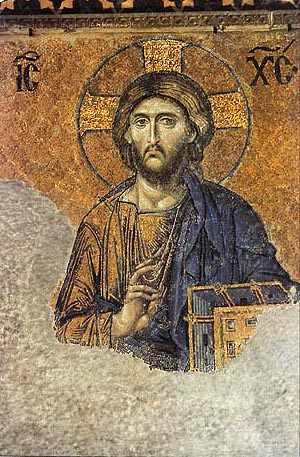
So, I walked into Haghia Sophia (an earlier post tells me it was on December 13) and there, in the penumbra, was a cat. Right there in the church-turned-mosque-turned-museum, HUGE (the building, not the cat), dark and cavernous and ill-lit in the entrance, then glorious with its high, high vaults and windows and walls of marble and Byzantine icons and Arabic inscriptions. The two cat photos are lousy, but just so you know there really is at least one cat in Haghia Sophia, here they are.

Below them, though, are photos of some of the other sights. Mostly I didn't take pictures. I figured there were better photographs in books and online, and for the most part the things I wanted to photograph were too high or too far away or not really accessible or too large for the lens I had. Also, I spent the first hour or so looking up with my mouth hanging open because the place was so amazing, so I doubt I'd have been capable of taking photos. My second hour there, or some part of a second hour, I recovered a bit and took these few pictures. Some are, as you will see below, photos of photos.

There is scaffolding in Haghia Sophia. There is almost always scaffolding there. It's an old building and an architectural miracle, so something always needs repair or threatens to collapse unless it's held up by something.


By clicking the links above, you will see photos that give you a little sense of the vast space. With my camera, I only took close-ups. Haghia Sophia is even bigger than you can imagine. The Byzantines never built anything close to that size again.


I've already posted a photo of the tile below, but I want you to get a sense of sequence in which I saw and photographed.


Many kinds of marble were shipped here to make the walls. (Remember, this is back in the 6th century, so we're not talking freight trains.) This was just one among many of the marble slabs, though one of the most beautiful.


I went upstairs after this. To get to the second floor, you walk up a corridor that winds around and still has what looks like the original pavement and walls.


I kept imagining, both on the bottom floor and as I walked up this corridor, what liturgy must have been like here. The robes, the incense, the processions.

All men, of course.

The Empress and her ladies sat upstairs, in a special gallery with a balcony.

I imagined what it might have been like to walk to the upper floor in this very corridor, on these very stones.

That's not a dead end. The corridor turns left when you get to that wall in front of you.


In one of the upper galeries was a photo exhibit. This isn't as ridiculous as it sounds. The upper walls of Haghia Sophia have magnificent mosaics (icons made of mosaic really), but you can't see them up close. With the help of some sort of fabulous photographic technology and maybe some scaffolding, a photographer whose name I don't have handy made this set of pictures of the mosaics. The curators then put them up in light glass or plexiglas frames so that they would have the real thing just behind them and you could thus get the best possible perspective on the mosaics. So I took photos of the photos.

This here is the Theotokos with Emperor John II Comnenus and Empress Irene, his wife. (There was more than one royal Irene in Byzantium. This is not Irene the Icon Queen --not her real title-- who lived many centuries before.) The mosaic dates from the early 12th century.

Then we've got someone who looks like John the Baptizer, but I must check. Sorry for the flash, but it was dark dark dark in there.


And here again is Herself.


After the fall of Byzantium in 1453, Haghia Sofia became a mosque, so it has minarets, and this is a view of one of them from the outside yard.


An ablution fountain, which I have mentioned before, is outdoors. It is not used since this place is now a museum, but it was for the use of the worshippers at the mosque, and there are many like it, though much less ornate, around town in other mosque courtyards.


And then there was a not too happy looking cat in a corner, outside either Haghia Sophia or the Blue Mosque. It looks cold to me. It was a grey rainy day. The cat inside Haghia Sophia was happier, sheltered under the great vaults and clearly at home in the building. I don't know what this business is in Orham Pamuk's memoir about packs of dogs roaming around Istanbul. I saw cats, cats, and more cats.

Saturday, February 2, 2008

Yes, there was Friday cat blogging (and various things on illness, ordination of women, Brigid, Candlemas, et al.)

Scroll down beyond the lament post below. Mrrrrowwww.

Me, I have been sick and stressed out. (The former doubtless influenced by the latter. Stress has been there for several weeks. Sickness crept up on me a day or two ago.) Not too badly sick, but trying to fend off something coldish or lungish or fluish. I have been taking homeopathic remedies and I slept all morning. (The same morning I was supposed to spend working to meet a major writing deadline after canceling a diocesan meeting I usually chair. But first things first.)

We have three finalists coming to town for a position in our department (Religious Studies, very small department, three and a half people, the half being an adjunct, so only three full-time tenure-track people). One came this past week -- intense visit as these always are (the poor candidate has to give a talk and be interviewed by two or three groups and about six or eight individuals one on one; my colleague Eric and I remember this all too well since he is only in his 4th year here and I in my 3d) but very good. All three candates are excellent. The next arrives Sunday night. The next the following Sunday night.

The position is in Islamic Studies and Social Ethics. We are a small department and everyone does more than one thing. But we are weighting the Islam training and teaching more heavily here.

Mercifully, classes are going well, much better than last semester. I know the material much better, I'm not hopelessly behind on returning written work, and there are fewer, um, challenging students. (Don't you love it when I understate? Must stay diplomatic. I do love my students but some absorb more energy than others.) But there is too much going on and unfortunately I cannot tell any of it to go away. The closest I came to that was deferring this morning's diocesan Anti-Racism Committee meeting till later this month - but that came at a price since I don't make such decisions without my executive committee and then one has to contact people (just writing isn't enough, you have to confirm everyone got the note) and make sure they don't show up at a church in the middle of the state and find no one there, etc etc. So that all takes time, though I had some help. And then I decided to take care of myself, and there went the morning. I am better but still not a happy puppy.

I also had to stay up writing a few little things because last night at midnight was the deadline for recommendations for applications to master's degrees at Harvard Divinity School and four of our best students are applying and I'd only finished one of the recommendations. And this is not something on which one does a sloppy job since we're talking people's lives and education here. I am very proud of my little darlings - not just of these but of the ones who are headed for service projects and nonprofit work after they graduate this coming spring. We have an unusual number of altruistic students at this college, many of them in our department. Some of them, in fact, are the same applying for further study; they want to use their education to serve others. So I stayed up writing essays about how fabulous and creative these youngsters are, and fortunately these days you can upload the essays and fill in all the check-this and rate-that part online. But it's still work.

So I have been a little overwhelmed. Those of you who pray, please send a few prayers my way.

P.S. Maya Pavlova acted like a hellion this noon after I woke up and tried to apply her monthly dose of anti-flea stuff. I have the scratches to prove it.

P.P.S. Happy Candlemas! And happy Brigid Day plus one! I have fallen down on the job in the saints department. For a fine Brigid reflection, see here. Some scholars and several tellers of stories (sometimes the same people) view Brigid as an ordained bishop. Abbesses and abbots had authority often equal to that of a bishop. So either answer may be correct :-). Most recent thing I have read in this general area is by the eminent scholar (and all-around great guy) Gary Macy in his recent Santa Clara Lecture, which I just got in the mail recently. His related and latest book (from Oxford University Press, if you please) is on the ordination of women in early medieval Europe. (You read that right.) But I have to go have some herbal tea. Talk amongst yourselves.

Friday, February 1, 2008

Friday cat blogging: Chora cat


Chora Church, a.k.a. Holy Saviour in the Country, a.k.a. Kariye Müzesi, Kariye Camii, or Kariye Kilisesi (the Chora Museum, Mosque or Church) is the church with the beautiful Byzantine mosaics, as beautiful as Haghia Sophia in its own way. I spent two hours there. Behind the church, of course, there was a cat. Istanbul, city of cats.

Chora Cat. Photo by Jane Redmont. Click to enlarge.

The back of the church looks like this:


Behind Chora. Photos by Jane Redmont. Istanbul, December 2007.

Monday, January 28, 2008

"Ferry to Chalcedon" post preview, and quick Senate vote roundup

Swamped again... Sigh.

To the left and below are a few preview photos of my two trips to the Asian side of the Bosphorus. The tale with photos (these and many others) in proper chronological order is under construction.

I am NOT listening to the State of the Onion. I will read it when it's over.


Cloture vote on FISA. Good. For updates on the scoundrel scene, see friends' posts here (Mimi) and here (Buddhapalian) and here (Buddhapalian again, on a not unrelated matter). Longish but worth it.


That's the view from the outdoor deck of the ferry. I froze my fingers taking it just for you.

Friday, January 25, 2008

Friday cat blogging: cats in a mosque courtyard


This was a prelude to the cats of Chalcedon. It was quite the multireligious trip to Istanbul and environs.

These cats will appear again (as will the Chalcedon cats) in the forthcoming, much awaited, really and truly finally happening, leisurely tale of The Ferry to Chalcedon, coming to you this weekend! Yay! One faculty committee meeting this afternoon (on the day I am not supposed to be on campus, but that's when the chair scheduled it) and then I get to work at home with the local feline and try to hatch deep theological thoughts and coherent sentences. (A very good week on the teaching front though -- I think this semester is going to be more pleasant than the last. Thank heavens.)

Click the photo for close-up and details.

P.S. Oh geez, I just realized I already posted this on January 4. Academe is frying my brain. Someone take me back to parish work! (Right - and that will fix my brain for sure.) I'm leaving these felines here because they were handsome three weeks ago and they're handsome now. And I have to get ready for my committee meeting.

Cats in Mosque Courtyard, Uskudur, Turkey. Photo by Jane Redmont.

Wednesday, January 9, 2008

Blogging may be a little scarce for a few days, but there is a lot to read below...

I need to take a little time off from being chatty, so bear with me (and pray for me) for a few days. Plenty to read and look at below since I was overly loquacious during the holidays.

And there will be more pictures and catch-up tales of Istanbul soon. Including one gorgeous mosque picture. Okay, here's a preview.* We'll revisit this place when I am back in circulation. Peace out.

* Yes, slanted on purpose so it would all fit in. Tilt your head, please. Click to enlarge.


Mosque and fishers in Ortakoy, December sunset. Photo: Jane Redmont

Friday, January 4, 2008

Friday cat blogging: more Turkish felines

Cats in a mosque courtyard, Uskudur, Turkey.

Uskudur is a municipality right next to the Asian section of Istanbul, on the other side of the Bosphorus from where I was staying, and has a famous mosque which a couple of French friends and I visited. I noticed the cats outside, of course. Click to enlarge and see detail. Handsome creatures.

Sunday, December 30, 2007

Istanbul photos: ablution fountain, Starbucks


Mosques have fountains where worshippers wash their feet and hands and face and perform other ritual ablutions before going to pray. I only saw men at these fountains.

This particular one was not in use.

Click on these two photos for detail and note the beautiful Arabic calligraphy at the top of the second one.


A couple of minutes' walk from Haghia Sophia (which was first a church, then a mosque, and is now a museum) is the tram on a very touristy street with, you guessed it and you see it, Starbucks.


Wednesday, December 26, 2007

Chaldean Catholics in Iraq - Muslims and Christians

Outside Mar Eliya church, not much had changed since last Christmas: Concrete blocks still surround the building and guards check the IDs of those entering. But inside, hundreds of Iraqi worshipers - Christians and Muslims - were crammed into the overflowing Chaldean Catholic church Tuesday, celebrating the holiday and the fact that they felt safe enough to venture out of their homes to attend Christmas Mass.

"Last year was the year of misery, desperation and sadness," said Samar Jorge Gorges. "But this year is better. So many people attend the Mass and you can see that their praying was joyful."

Cardinal Emmanuel III Delly, the patriarch of Iraq's ancient Chaldean Church said Mass, appealing for peace and unity across the war-scarred country.

"Iraq is like a garden and its beauty is the variety of its flowers and scent," Delly said during the service.

Among those attending were several Shiite Muslim sheiks, including Raad Tamimi, who said they had come "in solidarity with our Christian brothers . . . to plant the seed of love again in the new Iraq." Tamimi, a tribal leader, was excited to shake the cardinal's hand and asked that a photo be taken with his cellphone.

Many thanks to MadPriest for the story and the link.

Full story at the L.A. Times. They will make you sign up if you aren't already registered on the Los Angeles Times site, but it's free and they've never sent me spam. (I can't say the same for the Minneapolis Star-Tribune.)

O God of all peace,
whose child Jesus healed the sick
and walked with the suffering,
we thank you for your Spirit,
present among your people in Iraq.
We beg you
who have kindled the flame of love
in their hearts
to keep them strong
in you,
through Christ Jesus, saviour. Amen.

Friday, December 14, 2007

A city of contrasts

Yesterday afternoon: Haghia Sophia, with the tourists. Huge, astounding former church, former mosque, now museum. Imagining Orthodox liturgies resounding under the domes and clouds of incense wafting from huge censors carried by heavily robed clergy.

Photo: inside the Blue Mosque (photo by Temeraire.org)
Then the "Blue" Sultan Ahmet Mosque, where like everyone else I took off my shoes and like all the women covered my head with a scarf. Vast, carpeted, domed also. Men kneeling in the main space, women behind screens in the back.

Yesterday evening: holiday party for Turkcell, the biggest cell phone company in town (my host does business with them and had to make an appearance). No headscarves, no stockinged feet.
Little black dresses, suits and ties, sushi and smoked salmon and Iranian meat pastries, a very young crowd (the average employee age is 27), rock music in the background.

Today: a Sufi service, not the made-for-tourists whirling dervishes but the real thing, in an upper room (Sufism isn't legal here, though it isn't persecuted either), with forty people sitting on cushions, intent, gentle, reverent, chanting, in a decidedly un-tourist neighborhood. (How did I end up there? I have friends in town who are connected with this community and who invited me.)

I will write more about the great divide here. Deep secularists and strict religious practitioners. And then those, fewer, who live on bridges and cross over, now and again or on a daily basis.

Friday, October 5, 2007

Francis follow-up: Saint Francis and the Sultan

I promised more Francis fare, and here it is.

This comes from a New York Times op-ed from last Christmas Day by Thomas Cahill. I first heard the story in a sermon for the feast of St. Francis two years ago. So yes, the encounter between Francis and the Sultan really did happen. Read the op-ed here.

If the link won't work, please let me know and I will do a cut and paste job. The link works for me, but I have one of those login thingies --don't you love it when I talk tech?-- with the Times.


In the same vein, here is a meditation on Francis and the Sultan by Jesuit peace activist John Dear.

Here is another by a freelance Catholic writer, Wendy Hoke.

Saturday, August 25, 2007

A French sort of week(end): Saint Louis a.k.a. Louis IX

Today is the feast of Louis IX. He is never known as Louis IX in France; you always learn about him and talk about him as "Saint Louis," though everyone knows he is Louis IX because in elementary school you learn all your kings and queens and who was the son of whom and the wife of whom and (very important) the mother of whom and (as I noted yesterday) the mistress of whom.

In this case the mother was important, because Saint Louis (pronounced the French way, not the Missouri way) was only 12 when he became king, so like several other kings of France, he had a regent, that is, someone who did most of the governing in his stead, and in his case it was Blanche of Castille, whose name we learned at the same time as her saintly son's. We never did, now that I think of it, learn who his wife was. My memories of Saint Louis are: Blanche of Castille, the Sainte-Chapelle (Louis had it built to house a piece of the true cross and the crown of thorns), Crusades, the building of a famous hospital for the poor and blind, and death from typhoid in 1270 -- and also the fact that he wasn't entirely what one might think of as a saint. Then again, neither were a lot of other saints. But he did sound rather military and most of the other saints did not.
So let's go to the Daily Office bio for a little catch-up. There are errors in there in the French spelling, and I know I am being picky, but Americans who bungle French spelling, on restaurant menus or in historical biographies, or even when trying to be funny, get me irritated. (Ask PeaceBang, with whom I got all huffy (under my Beauty Tips for Ministers pseudonym), and yes of course PB and I are still friends.) I'm a grammar and spelling nut in English too, but there is something about the U.S. messing up of French that drives me particularly crazy. Psychoanalyze that -- I'm not going to bother. At any rate, the bio by James Kiefer is quite interesting as usual, but I have to note the proper spelling of the French cities of Limoges (which has an s at the end) and Périgueux (not Périgeux, which changes the pronunciation) and the province of Roussillon (two ss), from which there are some fine hearty red wines, as Dennis the wine maven will know.

The bio notes what I only vaguely remembered: that Louis was just and wise and had a mix of military valor and personal holiness. My students are always fascinated by the Crusades and by the new military orders (as in religious orders) that arose at the time: how did Christianity come to endorse violence and honor conquest? How did religious orders, which back in the days of Benedict, had almost exclusively been a sanctuary from fighting, expand to include warriors? What fervor for the holy places where Jesus walked drove the Crusaders? How to study the mix of faith, material greed, opportunism, and self-sacrifice present in the Crusades? What were relations with Muslims and Jews like and why? Why and how the killing? Were there friendly encounters as well? Louis's life contains, if not answers, at least illustrations for some of these questions. As a king, he did a great deal of good. I love Kiefer's accounts of Louis' friendships with Robert de Sorbon (yes, the Sorbonne was named after him) and Thomas Aquinas. His was a period of great intellectual and artistic ferment and creativity. One of the answers.com biographies notes that Louis ordered the expulsion of the Jews from France and had many copies of the Talmud burned: he was, alas but inevitably, a man of his time. (Note: the king who ordered the more strict and pervasive expulsion of the Jews was Louis' grandson, Philippe. See this account by the BBC researchers, a little more reliable than answers.com and well worth the read.)

Louis' life reminds us of the strength and subtlety required of those who rule, of the place of self-sacrifice in the exercise of power, of the complexities of every age especially when there is war and social chaos (which he managed not only to contain but to reduce), of the exercise of government with compassion, of the blind spots of all great people, and of an era with whose legacies we still live, in Europe, the Middle East, North Africa, and beyond: yes, here in the Americas too.